High Zoom Nikon vs Sony

Once again I took some comparison photos with my Nikon Coolpix P900 and my Sony DSC-HX400V, both high zoom – the Nikon offers 83x zoom and 16MP while the Sony “only” offers 50x zoom and 20MP. The Sony is also a more recent design and I’d expect it to be better.

However once again in most of these comparison photos, the Nikon is better for me – these combo photos all have Nikon on the left, Sony on the right. There’s no editing for exposure / color / etc, just the necessary cropping/pasting to combine the images.

First, here’s a photo of a hawk in a tree in the distance; you probably would not spot it if I hadn’t added the arrow:

Now let’s go to high zoom from the same spot, and then crop to have mostly just the hawk; for me the colors of the bird are better in the Nikon:

Next the bird moved so I took another pair of photos – in this comparison the Nikon is over-exposed while the Sony I’d say is a bit under-exposed (I could edit these for actual use):

Finally, I switched to taking photos of a nearby flower – in both cases I zoomed in to just the flower; the leaves are perhaps better in the Sony, but the flowers are over-exposed:

I cropped to include just of the flower and part of the leaf; for me, there’s again more definition in the Nikon image:

New office computers

For more than 15 years now, my company (PG Trionic Inc) has used Apple Mac computers – mostly the 27″ iMac version. The machines are very reliable and don’t have the problems with updates and drivers that we were always dealing with when we previously used Windows PCs.

While office programs like Word and Excel are fine, I have until recently coded all our products software using Windows tools – and we’ve happily used Parallels to make it easy (indeed Parallels is easier than using a “real” Windows computer, because we can simply “clone” an existing setup to a new Apple Mac when we buy one).

With the end of Intel-based Apple computers a few years ago, I stocked up on Intel iMacs for my office (and also got one of the last Intel MacBook Pros); I did some early tests with the first Apple Studio but the M processor prevented Windows use.

But now things have changed a lot … Parallels has for a year or more supported running “Windows on Arm” and I’ve confirmed that every Windows program we use (including the ones I’ve written) all work fine – there’s still a bit of a challenge with device drivers for unusual hardware, although the RS232 ports we use are supported now. I’ve also over the last year completely rewritten our most important computer support program and it of course also works on Windows Intel and Windows Arm.

So over the last week, I’ve replaced most of my Intel iMac machines with Apple M machines and I now have an Apple Studio M2, Apple Mac Mini M4, and Apple MacBook Air M4 … there’s still two Intel iMac machines running (in case I have a need to debug our old products, for example), but I expect almost all my work now to be done on these new machines – we also lost Skype support recently and Microsoft Teams doesn’t even run on our older iMac machines.

So here’s a view of my office area with its six computers and all the test / development equipment I have (why so many computers/desks/etc for one person? Well it makes it easy for me to switch from one task to another just by moving to a different setup). This first view is one of the two Intel iMac machines (this one is primarily a running backup) – behind it you might be able to see two more dual-screen setups on standing desks:

Another view here, looking at the newly set up M4 Mac Mini with Apple Studio display (really high quality) and a second 27″ Samsung monitor (poor, in comparison!); the two standing desk setups are more visible here, the left is the “legacy” Intel iMac that can debug old products, the right is an M2 Mac Studio (with another Apple Studio display):

Finally, behind the above views are two more computers – one is another “legacy” Intel iMac and the second is my new M4 MacBook Air (connected to a wide but not very good Dell monitor); the screen far in the background in this view is a TV / media player that gives background music during my work time:

Heritage Weather

The Winter Garden Heritage Foundation has regular history displays at their museum location downtown, and last night had a talk by Tom Sorrells (one time local meterologist) entertainingly introducing the weather topic, and with information about the frequency of hurricanes, tornadoes, etc in our area … of course I took some photos!
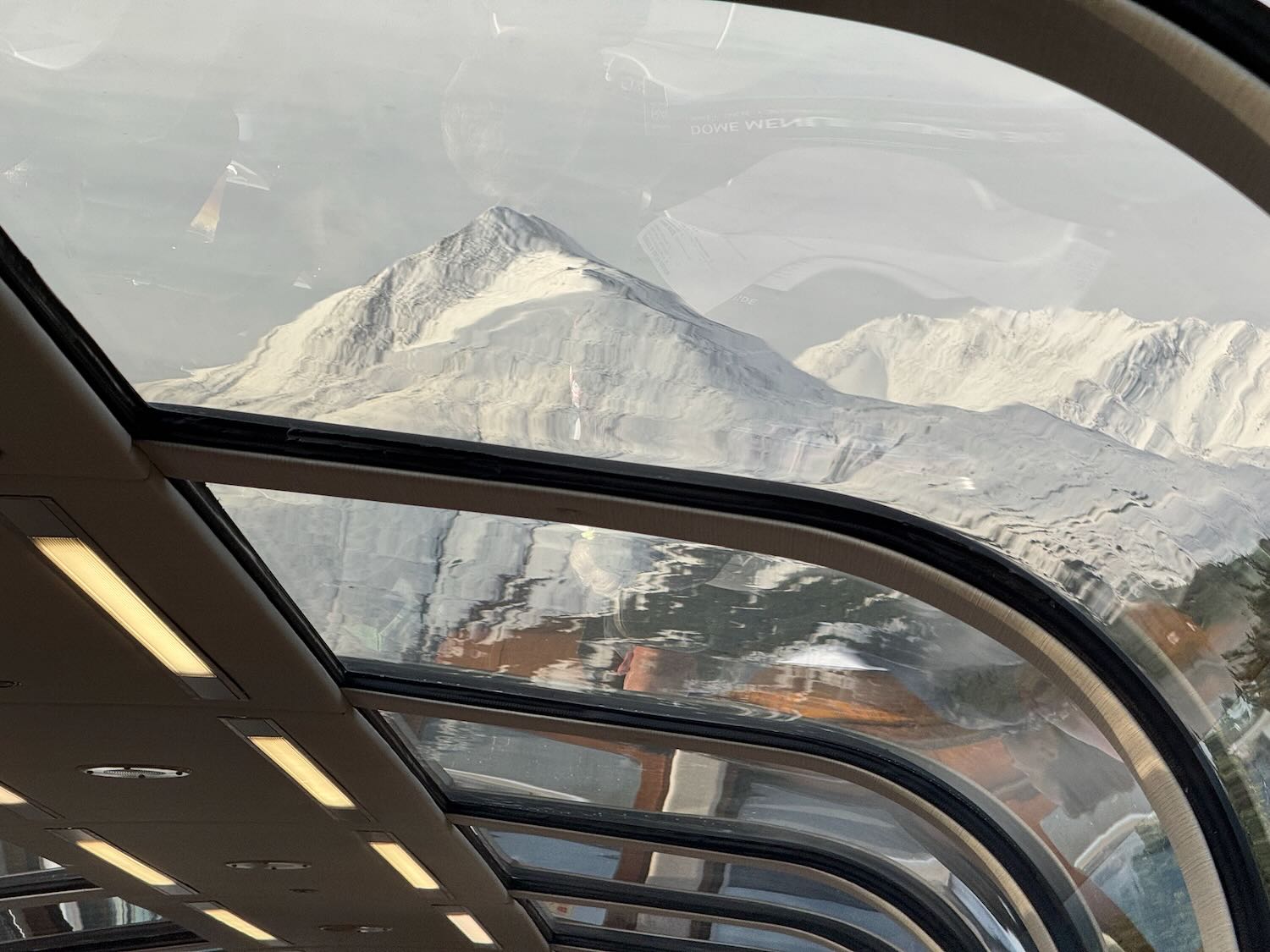
After the talk we adjourned next door to the museum to take a look at their weather displays, up for this month … it was a shock to see information about the 1998 tornado that hit right in Winter Garden (I’d not heard of it before!)